As an Amazon Associate I earn from qualifying purchases. Affiliate disclosure.
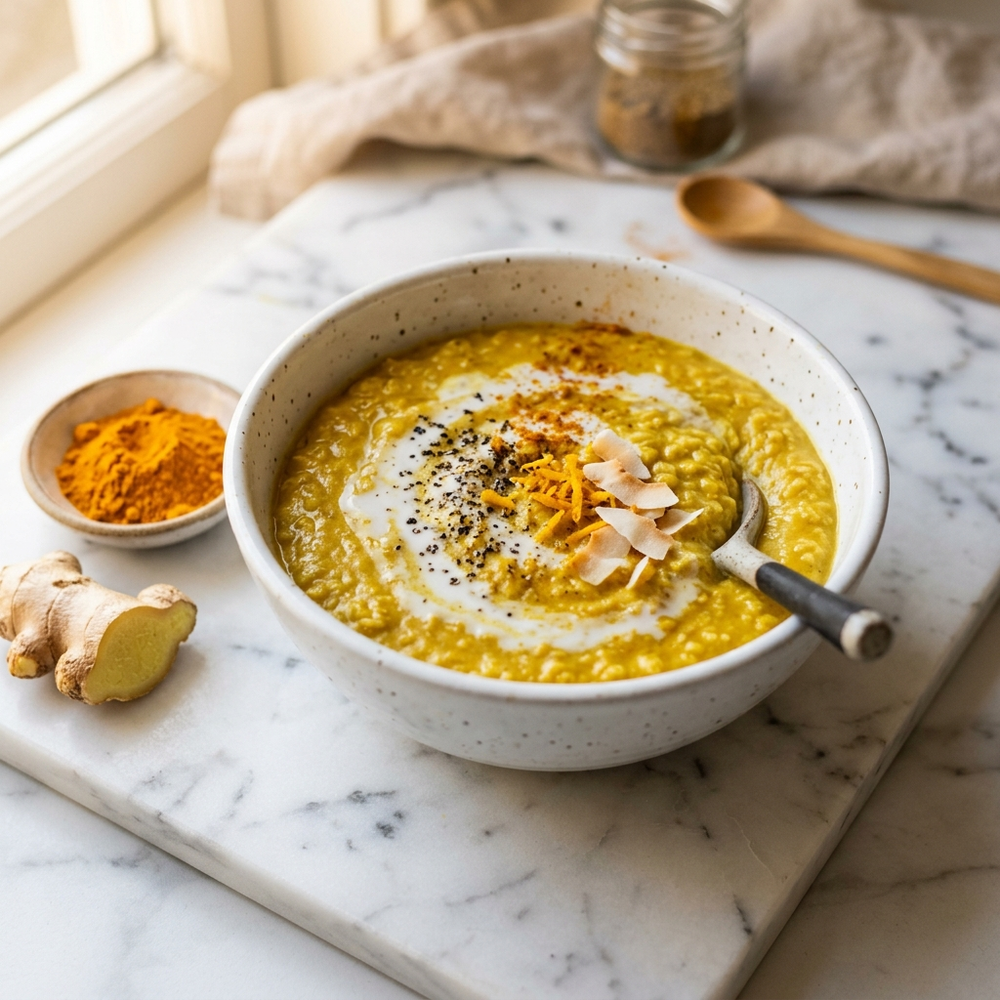
At a glance: Turmeric Golden Milk Porridge with Coconut Oil — Ayurvedic Breakfast: serves 2, cooked in coconut oil, with no seed oils.
Turmeric’s reputation as a superfood is real, but it comes with an important caveat: curcumin is fat-soluble and largely passes through the digestive system without being absorbed when eaten without fat and black pepper. The golden milk tradition — which combines turmeric, fat (ghee or coconut milk), and black pepper — is an ancient delivery system for curcumin that was figured out by Ayurvedic practitioners long before the pharmacology was understood. This porridge applies the same principle to breakfast oats.
Turmeric Golden Milk Porridge — Recipe
Serves: 2 · Prep: 5 min · Cook: 12 min
Ingredients
- 1 cup rolled oats
- 2 cups full-fat coconut milk
- 1 cup water
- 2 tsp ground turmeric
- 1 tsp ground ginger
- 1/4 tsp ground cinnamon
- 1/4 tsp black pepper (essential for curcumin absorption)
- 1 tbsp coconut oil
- 2 tbsp maple syrup or honey
- Pinch of salt
- To top: coconut milk drizzle, pumpkin seeds, fresh ginger, additional turmeric
Method
- Combine coconut milk, water, turmeric, ginger, cinnamon, black pepper, coconut oil, and salt in a saucepan. Whisk together and bring to a gentle simmer over medium heat.
- Add oats. Stir to combine and cook over medium-low heat, stirring frequently, for 8–10 minutes until the oats have absorbed most of the liquid and reached a creamy porridge consistency.
- Remove from heat. Stir in maple syrup or honey. Taste and adjust sweetness and spice.
- The porridge will thicken further as it sits. Add a splash of coconut milk if you prefer a looser consistency.
- Serve in bowls, topped with a spiral of coconut milk, pumpkin seeds, a pinch of extra turmeric, and freshly grated ginger.
The black pepper is not optional here. A quarter teaspoon of black pepper per serving increases curcumin bioavailability by up to 2,000% — the difference between turmeric as medicine and turmeric as colouring. The fat from coconut oil and coconut milk provides the second absorption mechanism. Eaten without either, turmeric porridge is just yellow oatmeal.
Curries, rice dishes, and Ayurvedic recipes in ghee, mustard oil, and coconut oil.
This page contains affiliate links. As an Amazon Associate I earn from qualifying purchases. Affiliate disclosure.
See the book on Amazon →Does black pepper really help absorb turmeric?
Yes. Piperine in black pepper inhibits glucuronidation — the metabolic process that breaks down curcumin in the liver and intestines before it can be absorbed. A study in Planta Medica (1998) found that 20mg of piperine alongside 2g of curcumin increased blood curcumin levels by 2,000% in humans. A quarter teaspoon of black pepper delivers approximately 5–10mg of piperine.
Can I use ghee instead of coconut oil?
Yes. Ghee is actually the traditional Ayurvedic fat for golden milk. It contains butyric acid (butyrate), a short-chain fatty acid that colon cells use for fuel, and has a slightly richer flavour than coconut oil. Use the same quantity.
Is this recipe vegan?
Yes, if you use maple syrup instead of honey. Oats, coconut milk, coconut oil, and all the spices are plant-based. The medicinal properties are the same as non-vegan versions.
All links: linktr.ee/theefoodiekitchen · Instagram: @theefoodiekitchen
Sources
Find more in: Indian recipes · Dinner & Main Dishes recipes · Coconut oil recipes · All recipes
African, Hawaiian, Indian, Mediterranean, Asian, Exotic, Chicken, Rice, Cookies, Coffee, Spices, Plants, World Cuisine, 30-Minute Dinners and more.
View All Books on Amazon →