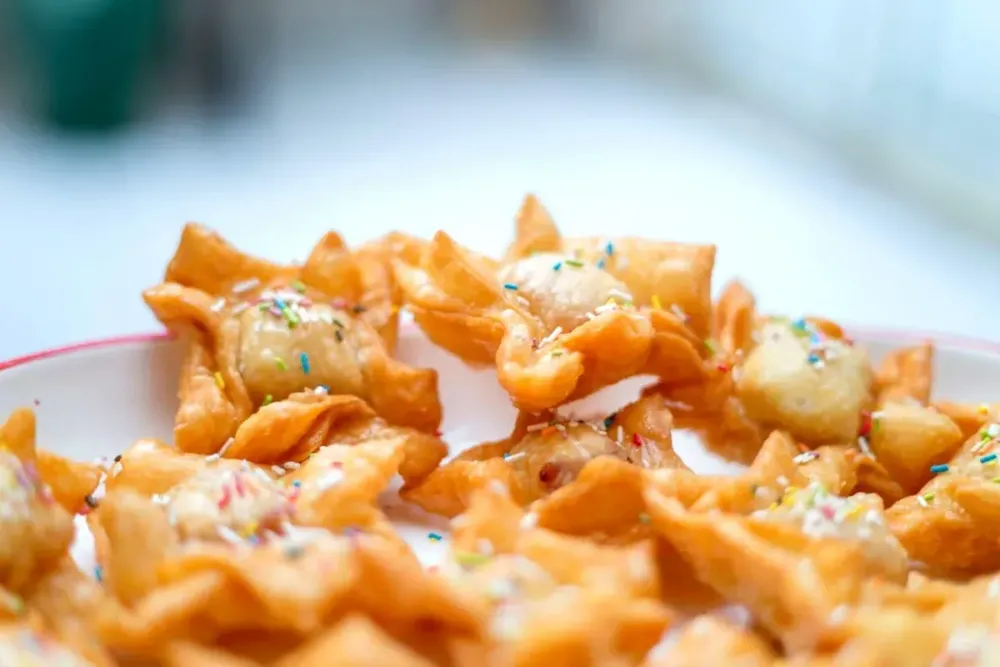
Chin chin is the festive fried snack of West Africa — particularly Nigeria, Ghana, and their diaspora communities. Small pieces of enriched dough (flour, sugar, butter, egg, flavouring) deep-fried until golden and crunchy, then stored in tins for weeks as a gift or party snack. Made in enormous quantities at Christmas and Eid, chin chin appears at every West African celebration and is one of the great fried doughs of the world. The original recipe uses lard. The modern version often uses vegetable shortening. The original is better.
The Lard Advantage
Lard produces chin chin with a lighter, more blistered exterior than vegetable shortening because of its different fat crystal structure. At frying temperatures, lard's fat crystals (which are larger and more varied in size than hydrogenated vegetable fat) produce more steam at the dough surface, creating the characteristic slight blistering that crunches satisfyingly when bitten. Lard also has a higher smoke point than butter, making it ideal for the sustained high-heat frying that chin chin requires.
Makes 500g · Prep 30 min · Fry 20 min
Ingredients
- 400g plain flour
- 60g caster sugar
- 1/4 tsp salt
- 1/2 tsp baking powder
- 1 tsp ground nutmeg
- 60g unsalted butter, cold and cubed
- 2 eggs
- 4 tbsp whole milk
- 1 tsp vanilla extract
- Lard for deep frying (enough to fill pot 8cm deep)
Method
- Mix flour, sugar, salt, baking powder, and nutmeg.
- Rub in cold butter until the mixture resembles breadcrumbs.
- Beat eggs, milk, and vanilla. Add to flour mixture. Mix to a firm dough.
- Knead lightly until smooth. Rest 30 minutes.
- Roll dough to 3mm. Cut into 1cm strips, then cut across into 1cm pieces.
- Or roll into long ropes and cut into 1cm pieces.
- Heat lard to 170°C. Fry chin chin in batches, stirring, until golden, 3-4 minutes.
- Drain on paper. Cool completely before storing — they crisp as they cool.
How do I know the lard is at the right temperature?
Drop one piece of chin chin in. It should sizzle immediately and float to the surface. If it sinks and doesn't sizzle, the fat is not hot enough. If it browns in under 1 minute, reduce heat.
How long do chin chin keep?
3-4 weeks in an airtight tin at room temperature. The low moisture content makes them exceptionally long-keeping.
What flavour variations exist?
Coconut chin chin adds desiccated coconut to the dough. Citrus chin chin uses orange or lemon zest. Some Nigerian cooks add a small amount of dried chilli for heat.
Follow Savannah: @theefoodiekitchen · Facebook · All Links
Storage and Reheating
Store in an airtight container at room temperature for up to 4 weeks. Lard-fried chin chin absorbs less fat during frying and stays crisper longer than seed oil versions. Do not refrigerate — condensation softens the crunch.
Recipe Variations
- Coconut chin chin — add 2 tbsp desiccated coconut and replace milk with coconut milk for a coastal Nigerian variation
- Savoury chin chin — add 1 tsp suya spice blend to the dough for a beer-snack version popular in Lagos bars
- Fat substitution — pasture-raised lard is the traditional fat here. Ghee, lard, or grass-fed butter each produce slightly different results.
What to Serve With Chin Chin
Serve at room temperature in a bowl — chin chin is eaten as a party snack and keeps its crunch for hours without a cover. Pairs with cold drinks, palm wine, or Nigerian Chapman. Standard at celebrations alongside puff puff and meat pies.
Why use lard instead of vegetable oil?
Traditional chin chin was fried in palm oil or lard. Lard's saturated fat content means the chin chin absorbs less oil during frying, produces a harder crunch, and holds it longer than seed oil versions.
Why is the dough so stiff?
Intentional — the fat comes from frying, not the dough. A soft dough produces a bready, not crunchy, finished product.
What temperature for frying?
350°F (175°C). Too hot and the outside browns before the inside sets. Use a thermometer on the first batch.
African, Hawaiian, Indian, Mediterranean, Asian, Exotic, Chicken, Rice, Cookies, Coffee, Spices, Plants, World Cuisine, 30-Minute Dinners and more.
View All 23 Books on Amazon →